FCC chair is accused of illegally trying to rein in the media. Here are his biggest controversies.
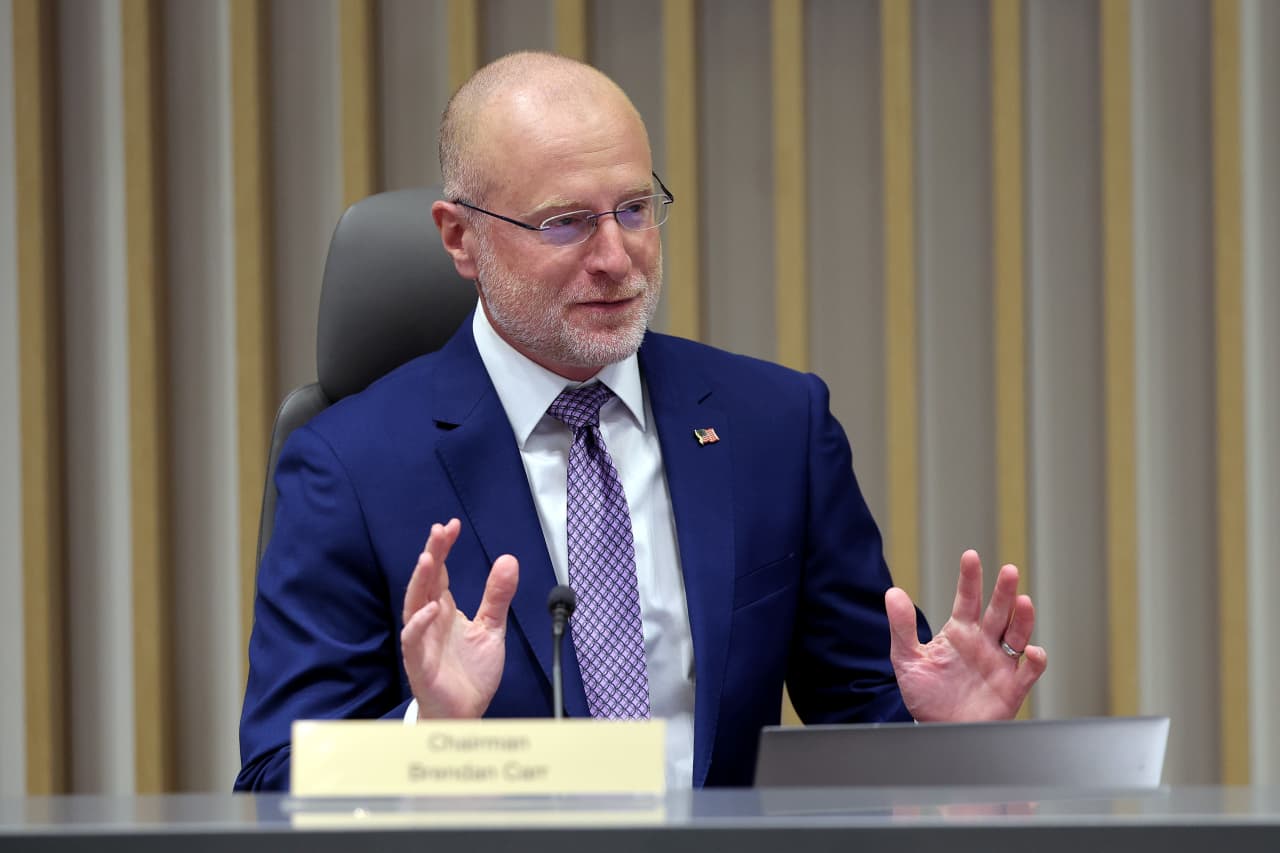
A legal watchdog group has asked bar associations to investigate whether Brendan Carr violated ethical obligations in his effort to enforce President Trump’s media agenda.
Editorial perspective
AI-assisted
Federal Communications Commission Chair Brendan Carr faces professional scrutiny over allegations he exceeded his authority while advancing the administration's media policies. The inquiry raises fundamental questions about regulatory independence and the boundaries of executive influence over broadcast oversight. For markets, the controversy matters because media companies operate under FCC licensing, and any perception of politically motivated enforcement creates regulatory uncertainty. Investors in broadcasters, streaming platforms, and telecommunications firms need clarity on what criteria the FCC uses when reviewing licenses or imposing conditions. If bar associations find merit in the ethics complaints, it could trigger leadership changes at the agency or constrain its enforcement discretion. More broadly, the episode highlights tensions between administrative authority and political pressure that affect regulated industries beyond media. Companies across sectors watch closely when regulators face questions about whether they're following statutory mandates or serving partisan objectives, as precedents set in one domain often migrate to others.
Originally reported by Lukas I. Alpert
for MarketWatch
Processing your unsubscribe…
Hang on a moment.
You've been unsubscribed.
You won't receive any more marketing messages from BlastiqTest3422. Updates take effect within 24 hours.
That link has expired.
The unsubscribe link is no longer valid. You can opt out manually instead.
Editorial perspective
AI-assistedFederal Communications Commission Chair Brendan Carr faces professional scrutiny over allegations he exceeded his authority while advancing the administration's media policies. The inquiry raises fundamental questions about regulatory independence and the boundaries of executive influence over broadcast oversight. For markets, the controversy matters because media companies operate under FCC licensing, and any perception of politically motivated enforcement creates regulatory uncertainty. Investors in broadcasters, streaming platforms, and telecommunications firms need clarity on what criteria the FCC uses when reviewing licenses or imposing conditions. If bar associations find merit in the ethics complaints, it could trigger leadership changes at the agency or constrain its enforcement discretion. More broadly, the episode highlights tensions between administrative authority and political pressure that affect regulated industries beyond media. Companies across sectors watch closely when regulators face questions about whether they're following statutory mandates or serving partisan objectives, as precedents set in one domain often migrate to others.